Is Your Brain Stuck in "Threat Detection" Mode? A Neurologist Explains
Most people believe that a lack of focus is a moral failing or a sign of laziness. As a board-certified neurologist, I can tell you that it is actually a biological conflict occurring within your Prefrontal Cortex.
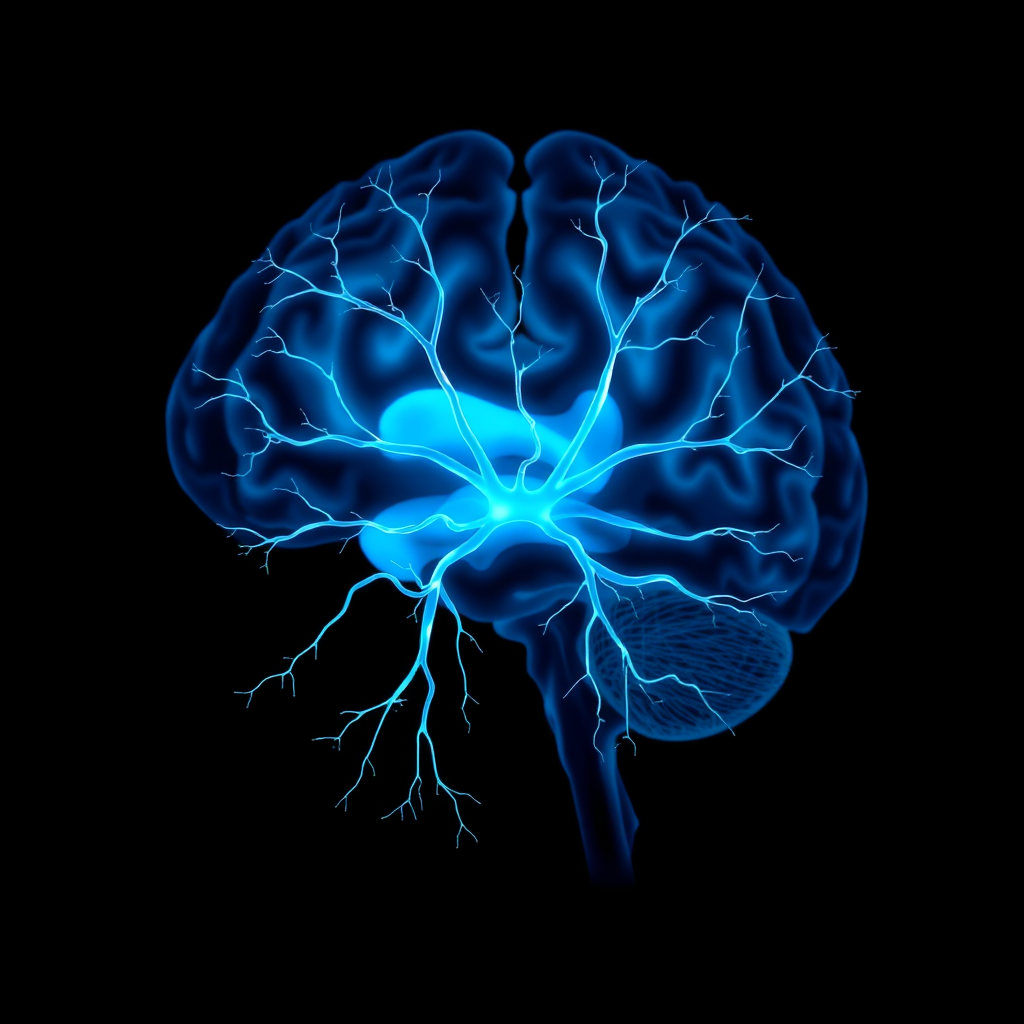
The human brain is wired for survival, not for spreadsheets, creative work, or deep focus. Every millisecond, your neural circuits scan for threats — real or imagined. When the alarm system is stuck on, your prefrontal cortex becomes a hostage. And that's exactly why you feel foggy, distracted, and disconnected from your best work.
This isn't about more coffee or better willpower. It's about understanding the blueprint of your nervous system. Let's dive into the mechanics that control your attention — and how to reclaim the helm.
The "CEO" of Your Brain
The Prefrontal Cortex (PFC) is the executive center of your brain. It is responsible for decision-making, complex planning, and—most importantly—the ability to enter a Flow State.
However, when your baseline stress is high, your brain shifts its resources. Instead of focusing on Deep Work, the PFC becomes overwhelmed by the brain's internal noise. You stop being the "CEO" and start being a passenger in your own mind.
What Steals Your Executive Control?
- Chronic Cortisol Elevation — Sustained high cortisol shrinks dendritic connections in the PFC, reducing your ability to concentrate over time.
- Thalamic Gating Failure — The thalamus normally filters irrelevant sensory data. Under stress, this gate opens too wide, flooding the PFC with noise.
- Default Mode Network (DMN) Overactivity — The DMN, responsible for mind-wandering, becomes hyperactive under threat, hijacking your attention.
Why You Can't Reach "Flow"
You cannot reach a state of high performance if your brain is constantly scanning for perceived danger. When the Prefrontal Cortex is noisy, it creates a mental barrier that prevents you from accessing the neurological sequence required for deep focus.
Key Takeaway
Chronic low-level stress keeps your PFC in threat detection mode — even when you're sitting safely at your desk. Your brain skips flow to stay "ready" for danger that never arrives. The average professional loses 2+ hours per day to this biological misdirection.
- 60% of adults report feeling mentally "foggy" for at least 3 hours daily
- Only 8% of people achieve a flow state regularly without structured intervention
- Neural noise increases by up to 40% during periods of sustained screen time
The result? Mental fatigue, procrastination, and the frustrating feeling that you're capable of more — but can't seem to unlock it.
The Neurological Sequence for Flow
Flow isn't magic. It follows a precise neurochemical sequence: PFC quieting → theta wave synchronization → dopamine release → norepinephrine modulation → sustained attention. When threat detection is active, this sequence cannot begin. The PFC stays hypervigilant, stuck in gamma wave patterns that block flow.

The 30-Second Sensory Reset
To lead your brain instead of fighting it, you must manually shift from internal rumination to external processing. I recommend the Sensory Grounding Hack — a technique I prescribe in my clinical practice for patients struggling with chronic distraction:
Close your eyes.
Shut off visual input to reduce cortical load by approximately 30%.
Identify three distinct sounds.
In your immediate environment — the hum of a fan, footsteps, distant traffic. This activates the temporal cortex and quiets the amygdala.
Silently label them.
"Fan sound," "footsteps," "wind." This moves your brain from feeling to processing — a shift from the limbic system to the prefrontal cortex.
Why This Works — The Neuroscience
- Reduces Amygdala Hyperactivity — External focus shifts blood flow away from the fear center
- Suppresses Default Mode Network — Labeling sounds engages the dorsal attention network, breaking the cycle of rumination
- Triggers Parasympathetic Activation — The vagus nerve responds to auditory processing, lowering heart rate and cortisol
- Resets Theta-Gamma Coupling — This neural synchronization is the prerequisite for entering flow states
This simple shift forces the Prefrontal Cortex to re-engage with the present moment, lowering the noise and clearing the path for focus. Try it before your next deep work session. Most patients report measurable improvement in concentration within seven days of consistent practice.
Take the Next Step
Understanding your brain’s blueprint is the first step toward high-level neuroplasticity. If you are ready to stop fighting your biology and start optimizing it, I have developed a comprehensive guide for you.
“This single exercise reshaped my entire morning routine. I went from fog to flow in under a minute.” — Sarah K., engineer
deepebook.net — free guide